
Monkey Whizz review: reliability, concealability, and detection risk explained for 2025
You only get one shot with a urine screen. If the sample looks off, reads cold, or fails a validity check, the window slams shut. You’re probably here because you’re weighing Monkey Whizz as a fast fix and you do not want a small mistake to wreck a job offer or create bigger trouble. This review lays out what Monkey Whizz claims, what labs actually look for, and where people often stumble—so you can avoid a choice you can’t undo. Is it reliable, discreet, and hard to detect in 2025 workflows? Let’s unpack that, carefully, and keep things lawful.
- Complete, all-in-one kit
- Identical to real urine
- Invisible under clothes
- Maintains perfect temp
Read this before you make a choice you can’t undo
We keep this straight and practical. You’ll learn what Monkey Whizz is, what typical urine checks look for, and how detectability and reliability are discussed in public sources. We do not provide step-by-step directions for substituting a sample or evading a drug test. In many places, that is illegal and against workplace rules. This guide is educational.
Who usually reads this? A lot of anxious first-timers who used cannabis once and now face a surprise test. They don’t want a one-time decision to wreck their chances. We offer context about risk and lawful alternatives you can consider when time and stress are tight.
One more note: more than a dozen states restrict synthetic urine. Rules vary by employer and testing provider—especially for DOT, probation, and some school settings. We work in a research community focused on quality data and responsible conduct. Any “bench” observations you’ll see here are educational, not operational advice. When your job or freedom is on the line, always ask a qualified professional about your specific situation. This information is for educational purposes only and does not replace professional consultation.
What actually comes in a Monkey Whizz kit
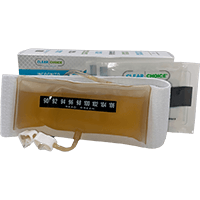
Monkey Whizz is sold by Serious Monkey Business as a ready-to-wear belt kit. The usual package includes:
– A pre-filled pouch with about 3.5 ounces of synthetic urine. It’s marketed as toxin-free and disease-free.
– An adjustable cotton elastic belt that’s designed to ride under clothing. Many listings cite up to a 54-inch waist.
– Two small heating pad units and a temperature strip on the pouch. The pads are meant to warm the liquid and keep it warm.
– Tubing and a small on/off tap for gravity dispensing. Most sets are unisex, but the hardware adds some bulk.
– Printed instructions and branded packaging. The look-and-feel leans “simple” and “discreet.”
You’ll also see many variants while researching: Monkey Whizz refill (just the liquid), Monkey Flask (a bottle setup), Monkey Dong (a prosthetic), and the Whizz Kit (another configuration). Branding can blur across sellers, so checking labels, seals, and dates helps avoid counterfeits.
- Complete, all-in-one kit
- Identical to real urine
- Invisible under clothes
- Maintains perfect temp
The checks a urine sample faces before labs even look for drugs
Most people think about the drug panel, but the first wall you meet is validity. Clinics and labs check if the sample looks and behaves like real urine. Here’s what that often means, in plain language:
– Temperature: Staff usually read a strip at hand-off. The target window is often about 90–100°F. Many sites flag anything below roughly 90–94°F. This is the fastest “freshness” check.
– Visual cues: Color, clarity, and foam are sometimes noted. If it looks odd—too clear, strange hue, or off smell—it can draw attention.
– pH and specific gravity: These show acidity and how concentrated the sample is. Out-of-range values suggest dilution or abnormal chemistry.
– Creatinine: This is a muscle waste product that appears in normal urine. Levels that are too low (or sometimes too high) can trigger questions.
– Uric acid and sometimes urea: Some validity panels include these, and newer or stricter workflows may check additional markers.
– Screening and confirmation: If the sample passes validity, immunoassay screens usually run first. A presumptive positive or suspicious result can move to confirmatory tests like GC/MS or LC/MS.
Any synthetic product has to sail through all those gates, long before anyone looks for THC or anything else.
What Monkey Whizz is said to be made of and why it matters
Public claims and reseller descriptions often say Monkey Whizz contains the common markers of urine. These include:
– Creatinine, to reach a believable range.
– Uric acid, a natural component in urine.
– Urea, a major urine solute—though this is the most disputed ingredient in user reports over the years.
– pH adjusters and salts to match acidity and specific gravity.
– Electrolytes such as sodium/potassium chloride and phosphates to mimic natural ion balance.
– Visual realism additives: colorants, mild odorants, and small foaming agents.
Remember, a temperature strip and the Monkey Whizz heating pads are not “ingredients,” but they’re central to clearing the first temperature check. The big controversy you’ll see online is this: does Monkey Whizz have urea? Some buyers say “yes,” some say “no,” and some say it varies by batch and year. That kind of variability is part of the risk. If a lab expects urea and a sample lacks it, that can be a red flag. Consistency matters.
Ingredient focus: creatinine and why labs care
Creatinine comes from muscle metabolism. Healthy urine contains it. If levels are very low, a lab can call the sample “dilute” or “invalid,” depending on policy. That’s why many synthetic formulas add creatinine. Too little looks like heavy dilution. Too much can also look strange. Some advanced validity panels pair creatinine with specific gravity to spot patterns that don’t fit human physiology. A believable range helps, but it’s not a free pass.
Ingredient focus: uric acid and urea
Uric acid is commonly present and many kits include it. Urea is one of the dominant solutes in urine. Its absence can be caught by certain checks. Across public reviews, older and newer buyers argue about whether Monkey Whizz consistently includes urea. If you see claims like “Monkey Whizz urea included,” treat them with caution. Packaging can change. Batches can differ. Detection risk rises when markers expected by a lab aren’t there.
pH and specific gravity
pH shows acidity. Urine typically falls roughly between 4.5 and 8.5. Extreme values are unusual. Specific gravity tells you how concentrated the urine is. Too low looks like heavy water intake or dilution; too high can look like a concentrate. Most synthetic products aim for a believable middle. But even “in-range” numbers can look odd if they don’t line up with other markers in a natural way.
- Complete, all-in-one kit
- Identical to real urine
- Invisible under clothes
- Maintains perfect temp
Temperature and freshness hurdles are unavoidable
Temperature is a gate you can’t step around. Staff usually check it fast. If it misses the window, you’re done. Monkey Whizz includes heating pads that many users say hold warmth for hours. We have seen public reports citing around eight hours, but real-world performance varies, especially in cold weather or air-conditioned rooms.
How long does it take Monkey Whizz to heat up? Many reports cluster around 20–30 minutes for the strip to show in-range. But strips can lag. People search “Monkey Whizz read green” when the strip finally shows the right color, and “Monkey Whizz temp strip not reading” when it doesn’t. A pad can be active, yet the strip may look blank for a bit if the environment is cold or the liquid hasn’t reached equilibrium. Overheating is also a risk. Yes, “can Monkey Whizz get too hot?” is a common worry. There’s no precision thermostat. If the sample feels very hot or crosses the top of the strip’s range, that can raise questions and even be unsafe to the touch.
Wearability and discretion in everyday clothes
The cotton belt is usually comfortable for light movement. Still, bulk depends on body type and clothing fit. Skinny jeans or tight athletic wear make any belt kit more obvious. Tubing length and routing pop up in reviews as comfort complaints. Some users talk about trimming or repositioning parts; keep in mind that altering any kit can void claims and increase risk. Listings often say the belt fits up to a 54-inch waist, but people near that limit sometimes report bunching or shifting. Because gravity-fed flow uses a pouch, tubing, and a valve, it’s bulkier than small bottle-only products.
Compared to a prosthetic device like the Whizzinator, a belt can be less conspicuous in some clothing. But a prosthetic can look more “anatomical” in other settings. Both add complexity. Neither solves the bigger questions around chemistry and validity.
Signals from user reviews
Public feedback shows patterns:
– Many “wins” are basic workplace cup tests where the temperature hits the window and hand-off is quick.
– Many “fails” trace back to heat pad issues or slow strip readings that caused panic, or to validity flags at the lab stage.
– Visual realism—color, foam, smell—gets decent marks. Chemistry realism is where uncertainty lives.
– First-timers say the strip is hard to read under stress. A no-read moment can lead to rushed choices.
– Availability and freshness matter. “Monkey Whizz near me” searches sometimes point to gas stations. Stale stock and counterfeits get mentioned a lot.
– Price sensitivity is real. Belt kits can be near or above fifty dollars. Single-use reality frustrates repeat buyers.
Could it be detected in 2025 workflows
“Can Monkey Whizz be detected?” isn’t a simple yes or no. Think in layers:
– Initial validity: Temperature out of range can end it right there. pH, specific gravity, and creatinine checks can also flag a non-biologic sample.
– Expanded validity: Some labs look for uric acid and may expect urea. Because public reports about urea in Monkey Whizz conflict, batch variability is a risk.
– Confirmation: GC/MS or LC/MS methods target drugs, not fake urine. But when a sample draws scrutiny, analysts can notice chemistry that doesn’t fit a human matrix.
– No brand is guaranteed “undetectable.” Risk climbs with stricter workflows, tight chain-of-custody, or observed collections.
– Searches like “monkey whizz biocide” and “does monkey whizz have nitrates” show worry about preservatives and odd additives. Public materials don’t confirm those details. Guessing at hidden ingredients can lead to false confidence.
Shelf life, storage, and one-and-done realities
Does Monkey Whizz expire? Yes. Synthetic urine has a shelf life. Check dates. Unopened, some batches may last many months, but that’s packaging-dependent and not a blanket promise. Once opened, the window shrinks a lot. How long is Monkey Whizz good for after opening? Most reports imply same day. Hours, not days. Warming and exposure speed up changes that lower plausibility.
How long does Monkey Whizz stay warm? Heat pad claims hover up to about eight hours. But cold weather, long waits, or pad variance can shorten that. Can you reheat Monkey Whizz? Most kits are sold as single-use. Reuse invites risk because warmed, exposed liquid degrades and can look wrong on validity checks.
Price, availability, and avoiding counterfeits
Reported prices land around the high-forty to low-sixty dollar range for belt-style kits, depending on the seller and configuration. Refill or bottle versions can run less, full belt setups more. Authentic, authorized sellers matter because counterfeits and stale stock are common complaints. Many brands say they don’t sell on big-box marketplaces. Regional legality also affects where and how it ships.
Listings like “Monkey Whizz refill” or “Monkey Flask” vary by vendor. Cross-check labels, dates, and seals. If a deal looks too good, it may be old stock. When timing is tight, “near me” purchases from random shelves are risky for freshness and authenticity.
How it compares to names you’ll see in searches
Here’s a high-level comparison to help you read marketing claims more critically. This is not an endorsement and not a usage guide.
| Product | Container style | Heating approach | Volume | Chemistry claims often seen | Notes |
|---|---|---|---|---|---|
| Monkey Whizz | Belt pouch with tubing | Heating pads; temp strip | About 3.5 oz | Creatinine, uric acid; urea claims vary by report | Focus on concealability; batch consistency debated |
| Quick Fix | Bottle kit | Heating pad; sometimes microwave pre-warm per packaging | Often 3 oz | Creatinine, urea, uric acid per brand materials | Compact; no belt hardware by default |
| Sub Solution | Bottle kit | Heat activator powder (no pads) | Varies by version | “Advanced formula” claims; premium pricing | Not a belt; chemistry claims are a selling point |
| Whizzinator | Prosthetic device | Heaters; body warmth | Varies | Varies by supplier | Anatomical look; more hardware and bulk |
Takeaway: people compare Monkey Whizz vs Quick Fix or Sub Solution based on volume, chemistry claims (urea/uric acid/creatinine), heating method, and how bulky the hardware is. Guarantees don’t exist. Settings like Quest, Labcorp, or Concentra add stricter validity checks and chain-of-custody.
A simple filter to gauge whether a belt kit is a bad fit for your scenario
Ask yourself a few plain questions:
– Is the collection supervised, observed, or connected to DOT or probation? Risk and consequences climb sharply.
– Is your site a major provider such as Quest, Labcorp, or Concentra with full chain-of-custody? Expect stronger validity screens.
– Is synthetic urine restricted where you live? Legal trouble can be worse than a failed test.
– Are you a first-timer under time pressure? Learning curves and temperature variance can sink you.
If any of those answers set off alarms, it’s a sign to consider lawful alternatives instead of gambling on hardware and chemistry you can’t fully control.
Why probation, DOT, and supervised settings change the risk picture
Observed collections reduce concealability. Belt hardware becomes a liability. DOT and probation settings focus hard on validity and chain-of-custody. Even if an initial screen seems fine, a discrepancy can trigger follow-up. Consequences include job loss, disciplinary action, or legal trouble. Online posts asking “does Monkey Whizz work for probation” show mixed anecdotes, but they can’t capture your local rules. When a license, paycheck, or freedom is at stake, conservative, lawful choices are safer.
Lawful steps if you’re anxious about a screen
There are practical, compliant moves that reduce panic:
– If allowed, ask about rescheduling or retesting. Employers sometimes permit it for legitimate reasons.
– If you used once and have days, know that occasional cannabis exposure can clear faster than daily use. Bodies differ. So do test types.
– Share prescriptions or OTC meds that could affect results with the official process.
– Ask HR or a legal professional about your rights and the employer’s policy.
– If substance use is a broader concern, consider professional help. Some programs coordinate documentation for employers.
We run a research platform and value data integrity. We favor steps that keep you within rules and protect your future.
What we’ve seen in educational bench-style checks
We do not run clinical validations. But in educational, non-clinical bench checks conducted to better understand data quality issues:
– Temperature strips often lag when moving from cold rooms to warm environments. A blank strip can simply be a delay, not proof of “cold.”
– Heating pad performance varies. In cooler rooms, pad output drops sooner than advertised. That aligns with many user reports.
– Visuals—color and foam—looked close to natural urine in several kits. Chemistry is the decisive factor in labs, not looks.
– Package claims about urea shift across time. We’ve seen boxes that list it, and user comments that dispute it. Batch tracking in public retail is inconsistent.
– None of this proves reliability in real testing. It explains why outcomes vary and why a kit can feel unpredictable under stress.
Evidence standards and how we keep this balanced
We synthesize manufacturer statements, public reviews, and comparative product pages. When claims conflict—like whether Monkey Whizz contains urea—we flag the uncertainty instead of picking a side. We avoid operational instruction and stick to validity, detectability, and policy context. Our comments come from educational observations, not clinical trials. Always verify your testing site’s current policies and your local laws.
Mistakes first-time buyers make and safer ways to interpret them
– Believing any product is undetectable everywhere. Validity panels vary. Some are very strict.
– Taking “Monkey Whizz heating pad” claims as promises. Room temperature, clothing, and pad variability all matter.
– Panicking when a “Monkey Whizz temp strip not reading” moment happens. In cold spaces, strips can lag. Rushing leads to worse choices.
– Assuming “does Monkey Whizz have urea” has one answer. It may differ by batch or year.
– Buying from random shelves or unknown websites. Counterfeits and expired stock are common complaints.
– Ignoring legal context. Even possession of synthetic urine can be illegal in some places.
– Trusting only “monkey whizz reviews.” Success posts are loud; failures are quieter. Survivorship bias is real.
– Reheating or reusing the liquid. Chemistry degrades. Most kits are single-use for a reason.
– Choosing only by price in Monkey Whizz vs Quick Fix comparisons. Consider chemistry, heating method, and your test setting.
– Waiting until the last second. Shipping delays and learning curves can undo the best-laid plans. Lawful alternatives often work better when time is short.
Money math and single-use expectations
Sticker price for a belt kit can land around fifty dollars from many retailers; some list higher. It’s usually single-use. If timing slips or a pad underperforms, replacement costs pile up. Add-ons like extra Monkey Whizz heating pads or a Monkey Whizz refill bump the total. Premium brands with “advanced” chemistry claims may cost more, but still carry risk. Counterfeits make “cheap” buys very expensive when the sample fails a basic validity screen.
A grounded summary you can act on
Monkey Whizz is a discreet belt kit with about 3.5 ounces of synthetic urine and heating pads. It aims to mimic key markers like creatinine, uric acid, pH, and specific gravity. The biggest chemistry question is urea. Public reports about inclusion have varied across time, which adds uncertainty. Reliability depends on temperature stability, believable chemistry, and how strict the testing workflow is. You don’t control any of that once you walk in.
Detection risk rises in supervised settings, DOT or probation contexts, and at major labs with robust validity checks. Legal and employment consequences can be severe. If you’re an anxious first-timer, lawful steps—clarifying policies, asking about timing, or simply waiting if time allows—usually carry far less risk than substitution devices. If you’re comparing options by hardware style, it can help to read about alternatives like Quick Fix or the Whizzinator, but remember: no product guarantees a pass.
Frequently asked questions
How long does it take Monkey Whizz to heat up?
Public reports cluster around 20–30 minutes to reach a readable temperature window on the strip. Pads and ambient temperature can shift that time. A strip can lag, especially in cold rooms. This is not a guarantee—just a pattern seen in many user comments.
Can Monkey Whizz be detected by regular laboratory tests?
Yes, in some workflows. Labs don’t look for brand names. They check if a sample behaves like human urine. Out-of-range temperature, pH, specific gravity, or creatinine can flag it. Some panels also look for uric acid and expect urea. There are no guarantees of being “undetectable.”
Does Monkey Whizz still work at Quest Diagnostics or Labcorp?
Major providers like Quest, Labcorp, and Concentra typically follow strict chain-of-custody and validity procedures. That means tighter checks and less room for error. Anecdotes online can’t speak for your site’s current policy or your collection conditions.
Does Monkey Whizz have urea, uric acid, and creatinine?
Claims about creatinine and uric acid are common. Urea is the debated ingredient. Some buyers say newer batches include it; others say the opposite. That variability is part of the risk if a lab expects to see urea.
How long does Monkey Whizz stay warm and can it get too hot?
People often cite up to about eight hours for heat pads, but results vary with room temperature and pad performance. Overheating is possible and can look abnormal. There is no precision control in pad-based warming.
What is Monkey Whizz made out of and is it real pee?
It is synthetic urine. Public materials reference creatinine, uric acid, pH and specific gravity tuning, salts, and color/foam agents. It is not real human urine. Realism has limits, especially under advanced validity checks.
Does Monkey Whizz expire and how long is it good for after opening?
Yes, synthetic urine has a shelf life. Check dates on the box or pouch. After opening, the typical guidance is same-day use. Exposure and warming shorten plausibility.
Will Monkey Whizz pass a ten panel test or a DOT physical?
Drug panels focus on substances, but most failures happen earlier at validity. DOT and similar settings add strict oversight and consequences. No synthetic urine is a safe bet in those contexts.
Quick Fix vs Monkey Whizz: which is better?
They differ in hardware, heating method, and volume. Monkey Whizz is a belt pouch with pads; Quick Fix is a compact bottle-based kit. People argue about chemistry realism on both sides. Neither offers guarantees, and strict workflows can detect either.
How do I read the Monkey Whizz temperature strip if it isn’t showing?
Temperature strips can lag, especially after cold exposure. A no-read moment can be a delay, not proof of failure. That said, we don’t provide operational steps. If anything feels unclear or risky, consider lawful alternatives and professional guidance.
A quick word on our perspective
We help build HDBase, a research community resource that organizes scientific data. In our work, data integrity is everything. That lens shapes how we review products like Monkey Whizz. We look at chemistry markers, workflow checkpoints, and practical failure points under stress. When we ran small, educational bench observations to understand why results vary, the big lesson was simple: temperature and chemistry variability create real, unpredictable risk. In real clinics, that risk gets bigger, not smaller.
This guide is educational. For decisions that affect your job, schooling, or legal status, talk with qualified professionals and follow local laws and policies.